What You're Actually Looking At
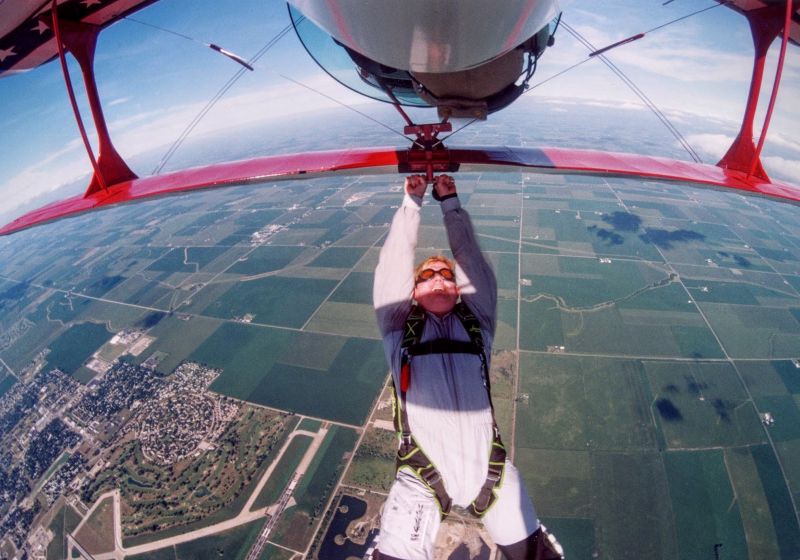
The photo is exactly what it looks like.
I'm hanging off the bar of a biplane. The plane is inverted. A few thousand feet of Midwest farmland is stretched out underneath me like a quilt nobody asked permission to lay down. The World Free Fall Convention used to be the place you went if you wanted to do the stupid, beautiful version of skydiving that didn't fit in a normal jump manifest. Camera flyers. Big-way formations. Aerobatic exits. Things you tell your mom about after.
People see this image and assume the scary part of the jump is the falling.
It isn't. Not even close.
Why The Falling Is The Easy Part
The falling is the easy part because by the time you're falling, the decision is already behind you. Physics has taken over. Your job at that point is almost embarrassingly simple: arch, count, check altitude, deploy. The hard thinking is done. Gravity doesn't negotiate.
The hard part is the bar.
Your hands are still on it. The wind is doing things to your jumpsuit you weren't briefed on. The pilot is holding the inverted line longer than you remembered agreeing to. And your brain — the same brain that voluntarily climbed out onto a wing strut sixty seconds ago — is suddenly an extremely competent lawyer arguing every reason to hold on for one more second. One more breath. One more check. Wait for a better moment. Wait until it feels right.
It never feels right. That's the whole point of the bar.
The Career Version Of The Bar
I have watched a lot of smart, capable, well-trained people freeze on the bar in their careers. They've done the work. They know exactly what jump they need to make.
Leave the role that's quietly draining them. Fire the executive everyone on the team can see is wrong. Kill the product line they've been propping up for years. Have the conversation with the co-founder. Walk away from the contract. Start the company they've been describing to their spouse on every long drive for the last three years. Say the unpopular thing in the board meeting that everyone in the room already knows is true.
They've trained for it. They've journaled about it. They've paid coaches to talk them through it. They've run the numbers, modeled the downside, talked to the lawyer.
They just can't let go of the bar.
Usually because letting go means admitting, even quietly to themselves, that the old grip wasn't working. That the role they outgrew is the role that built their identity. That the executive they're protecting is someone they personally hired. That the product they're keeping alive is the one that funded the house. The bar isn't just metal. It's history.
The Lie The Bar Tells You
Here is the trick the bar plays on you, in the air and at work.
It feels like it's keeping you safe.
It isn't. The bar isn't safety. The bar is just what's keeping you on the plane. Two completely different things. Safety is the canopy on your back, the reserve at your hip, the training you put in for the last however many years. The bar is just inertia with a handle on it.
The longer you hang there, the more your arms burn, the more your mind invents reasons, the worse the eventual exit gets. Plane jumps and career jumps share that property. Delay doesn't reduce risk. It just degrades the conditions of the inevitable exit.
What To Do If You're On The Bar Right Now
If you're reading this and your stomach just did something — that's information. Don't argue with it. Don't journal it into submission. Sit with it for a second.
Then ask three questions, in this order.
What's the actual jump? Name it precisely. Not "I should think about leaving." The specific decision. Resign by Q1. Sunset the product by March. Have the conversation with my co-founder before the next board meeting. Vague jumps don't get made.
Is the prep done? Honestly. Not perfectly. Done enough. If you've been preparing for more than six months, the prep is done and "more prep" is just a more sophisticated form of holding the bar.
What is the bar actually giving me right now? This is the one that hurts. Strip away the safety story. The bar isn't keeping you alive. It's keeping you attached to a version of yourself or a version of the business that you've already outgrown. Naming what the bar is actually protecting — your ego, your title, your story, someone else's feelings — is usually what unsticks the grip.
The Exit
Nobody is going to count you out of the plane. The pilot can hold the inverted line for a little while. He can't hold it forever, and he definitely can't decide for you.
If the prep is done, the bar isn't keeping you safe. It's just keeping you on the plane.
Let go.